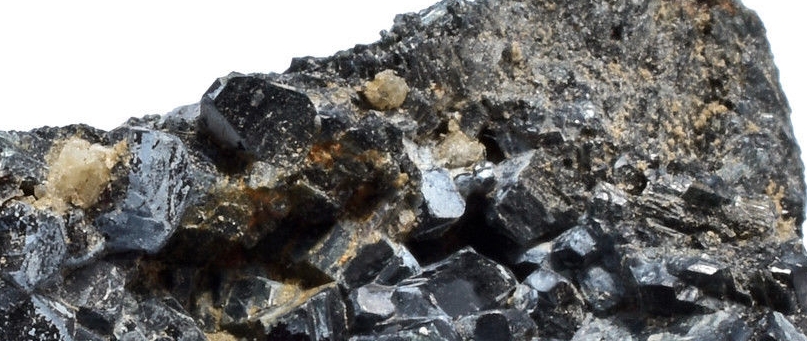
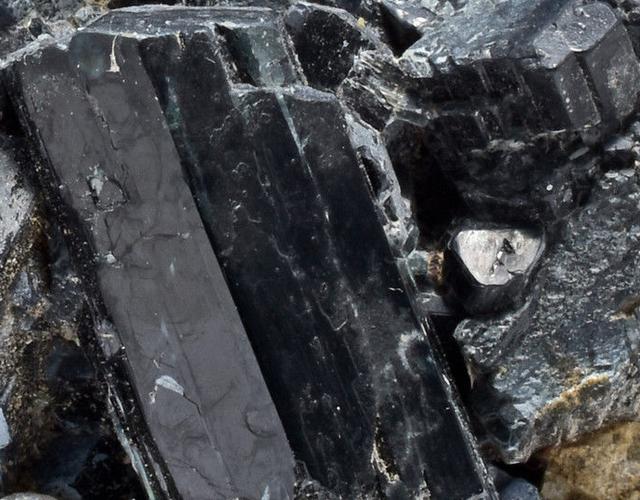
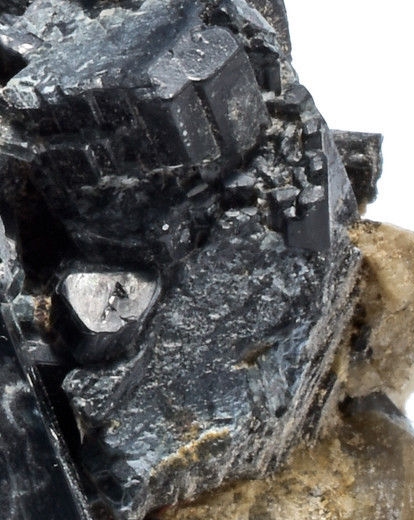
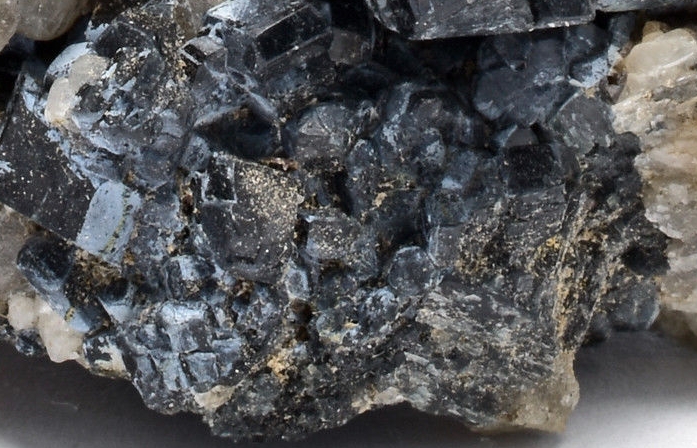
Amphibole
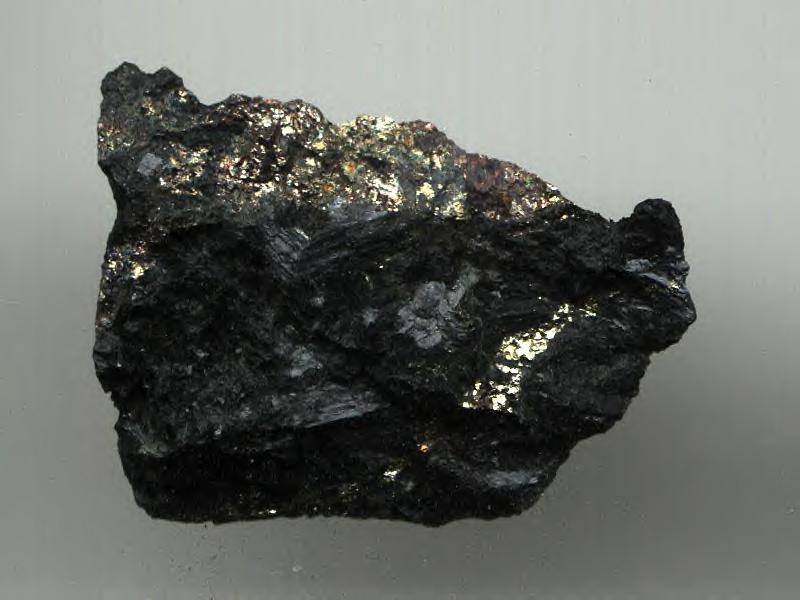
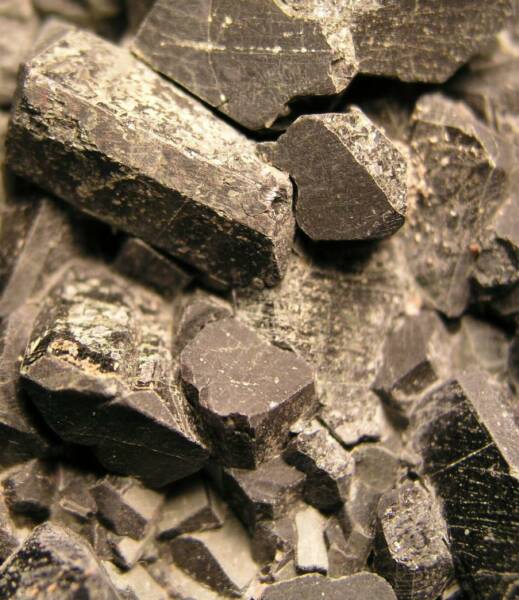
(Hornblende)
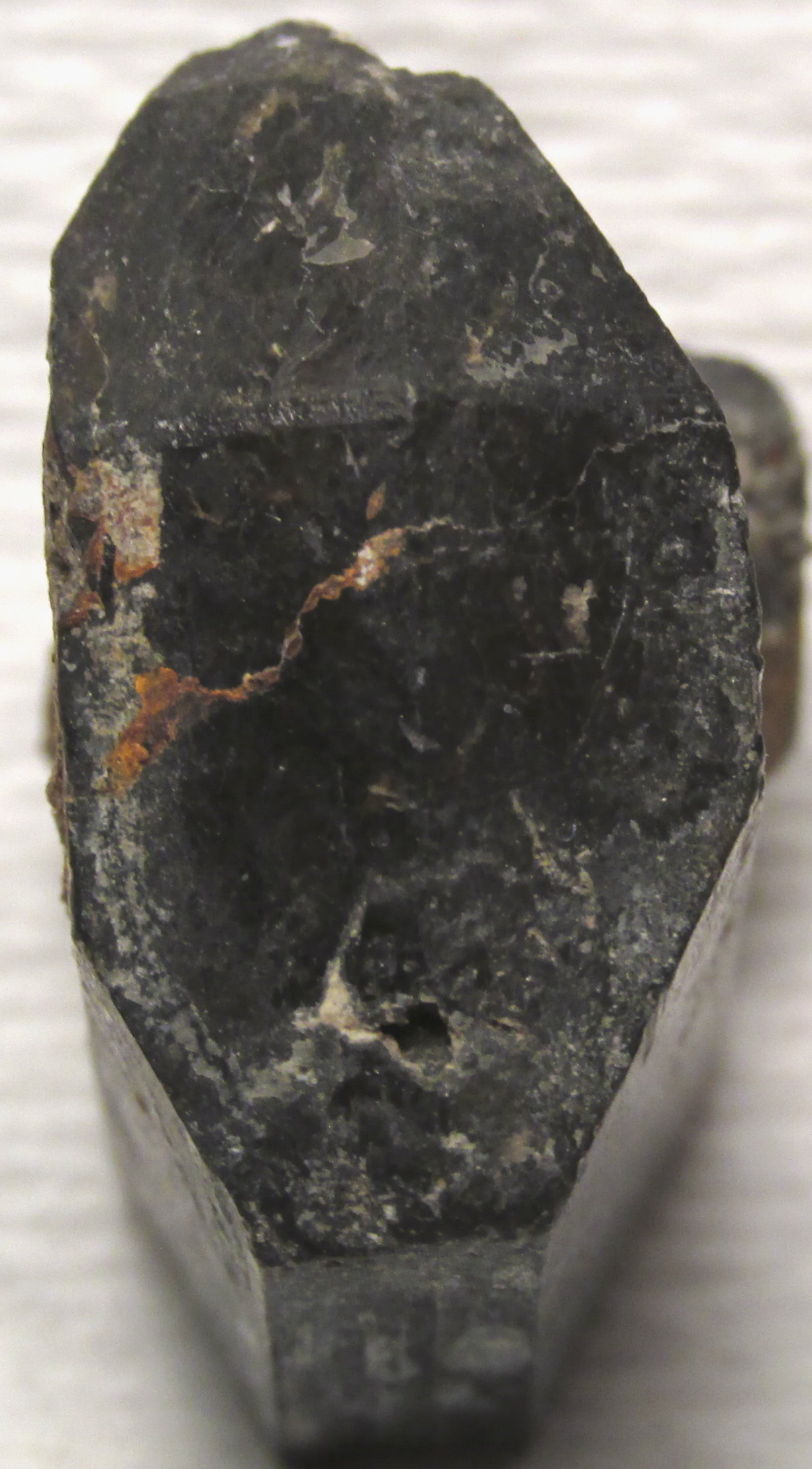
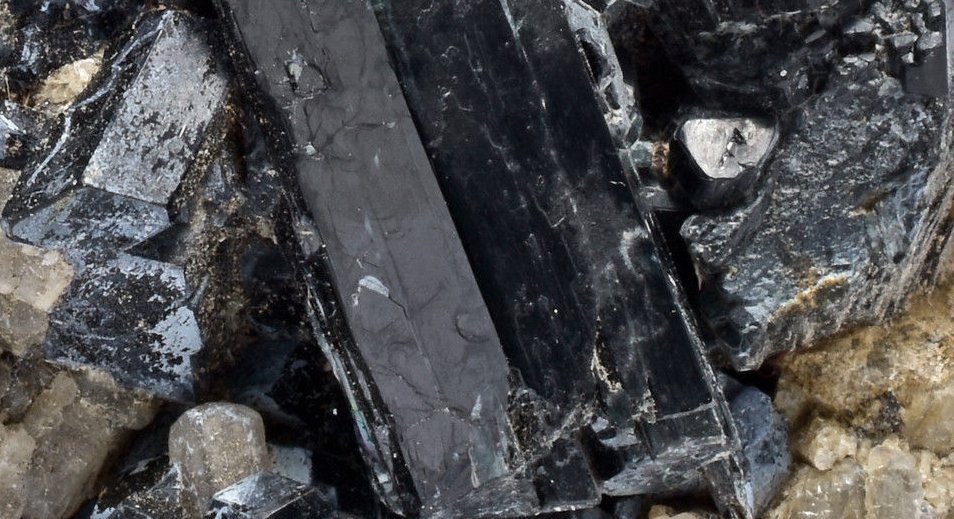
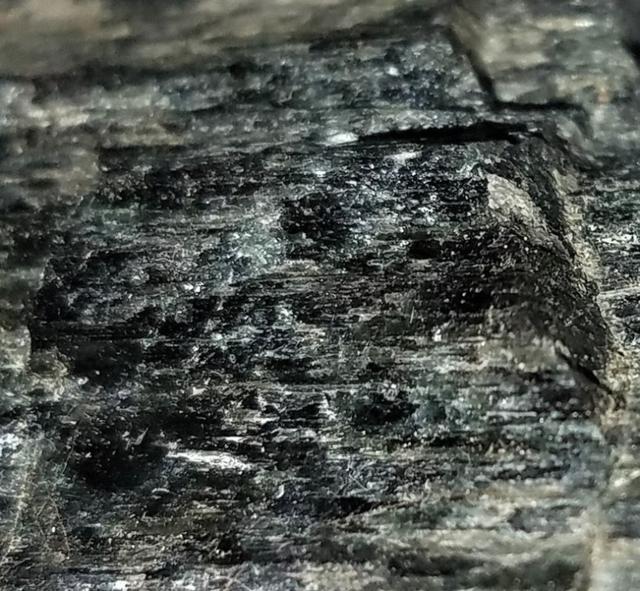
NORWAY
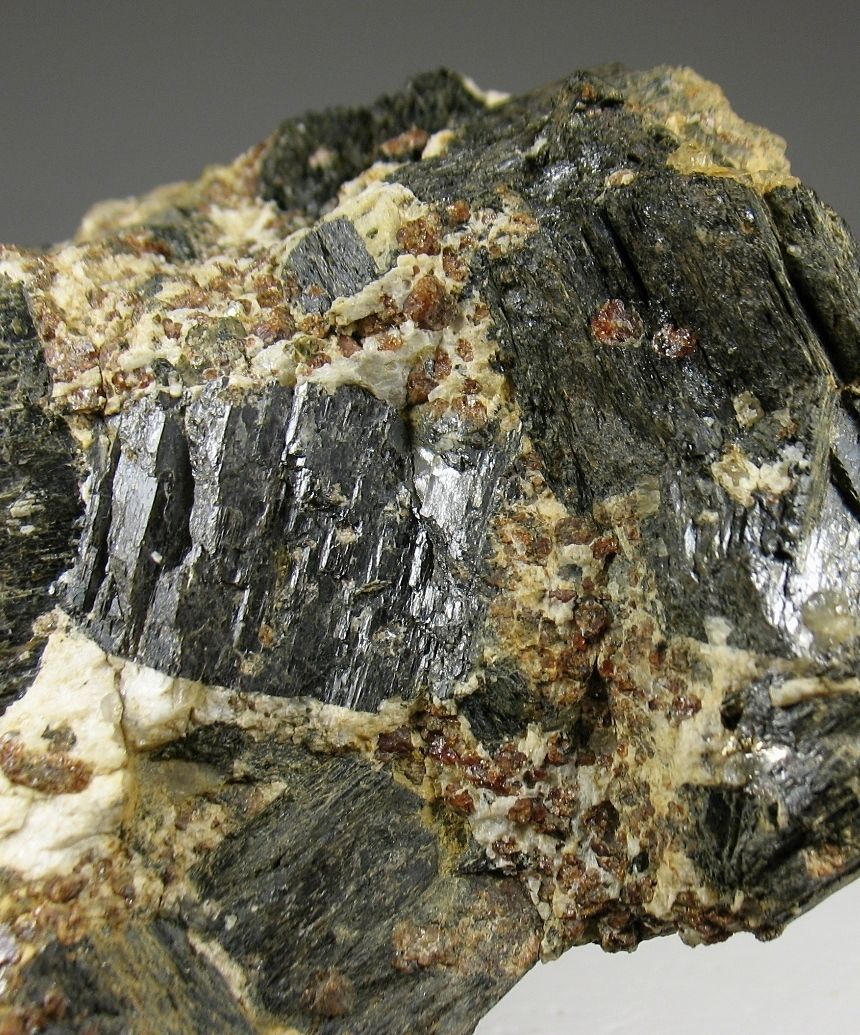
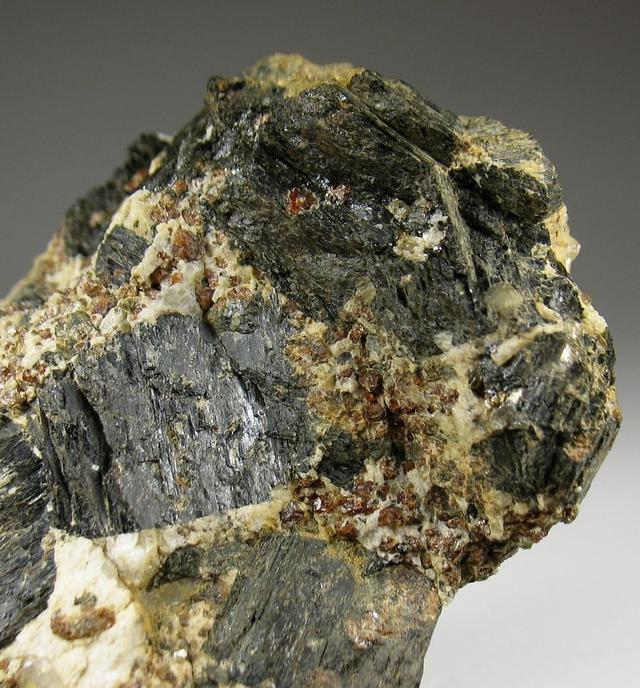
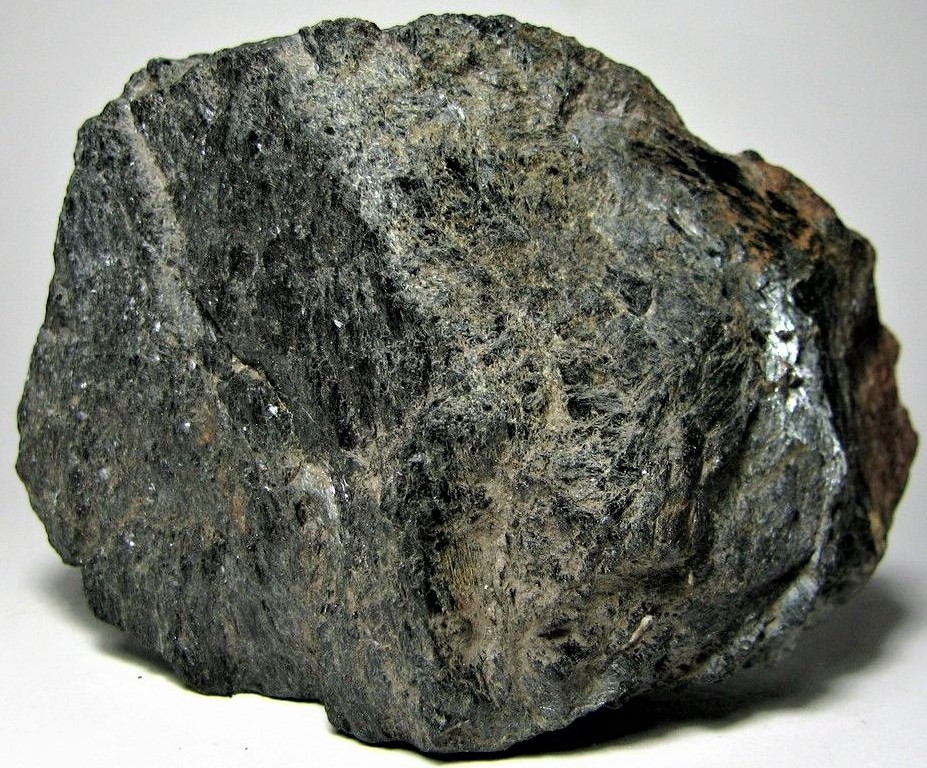
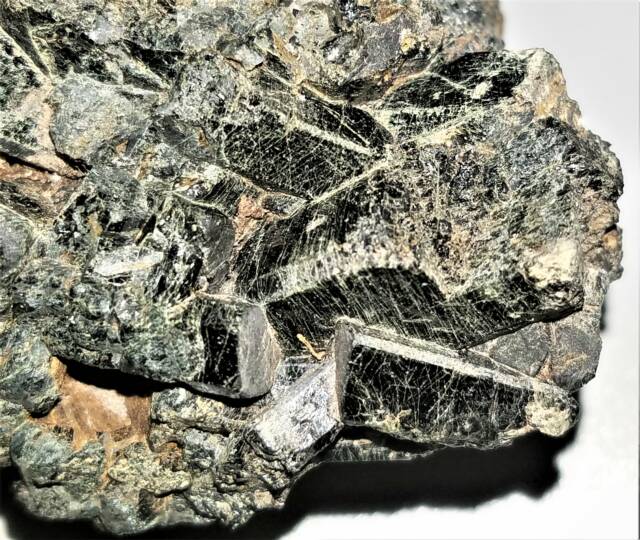
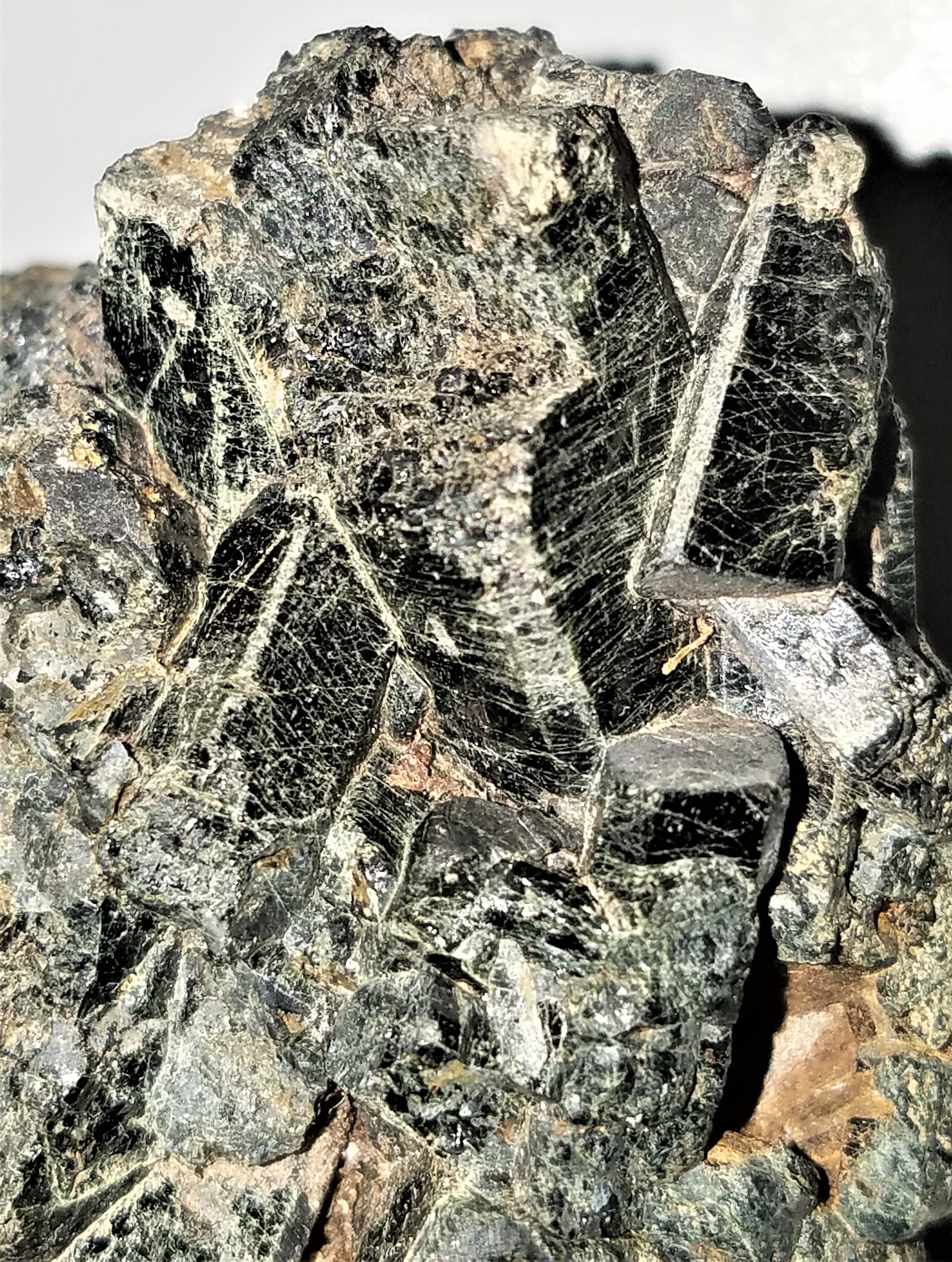
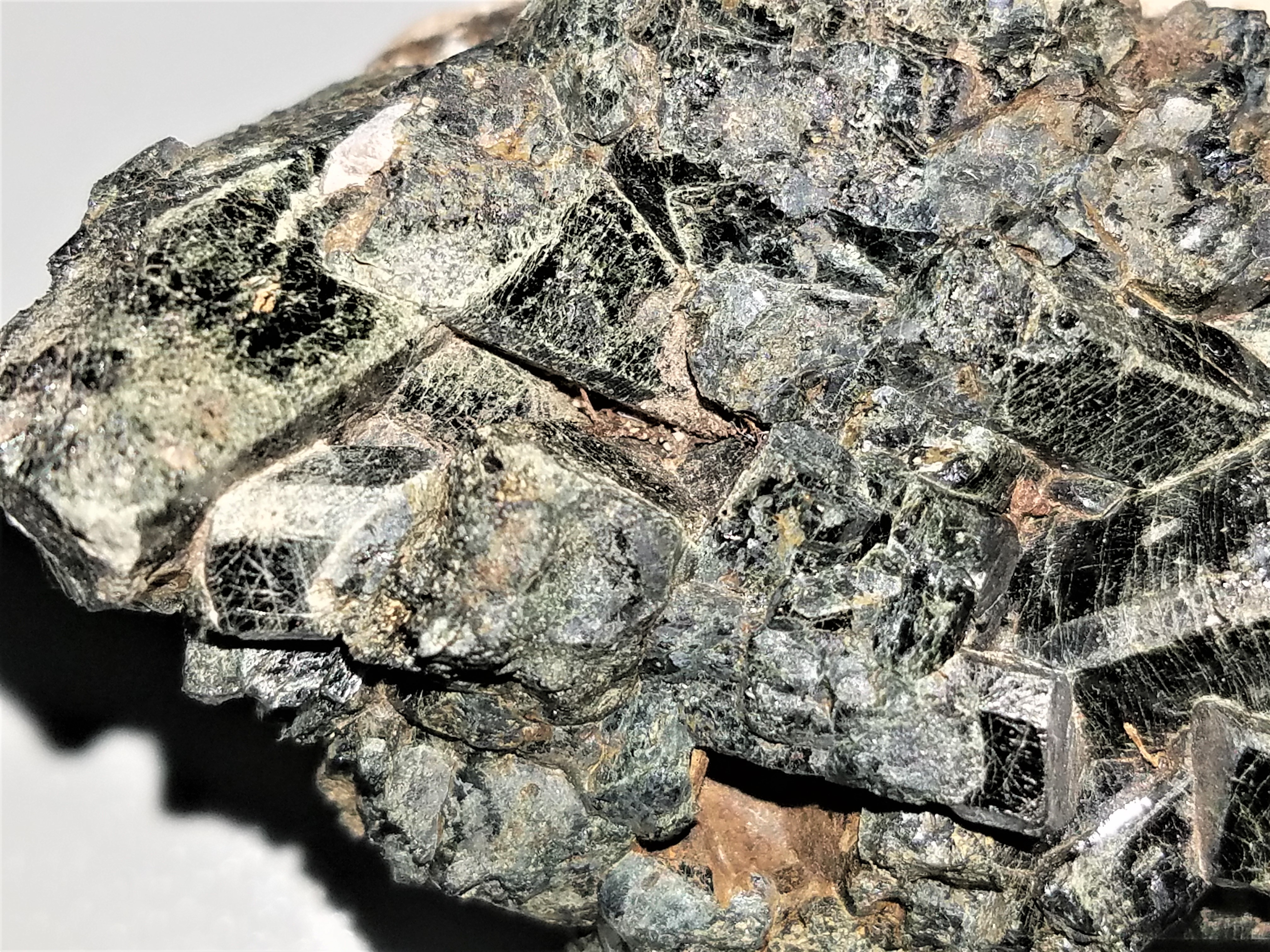
Hornblende
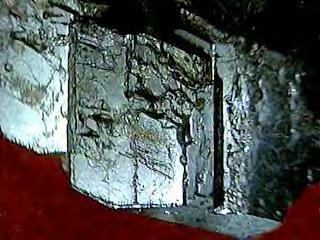
Single Crystal
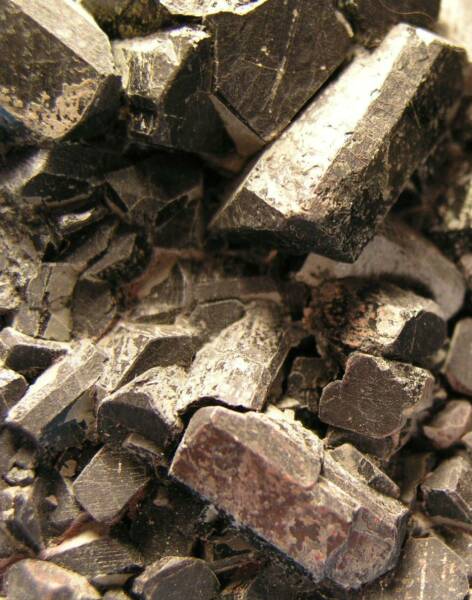
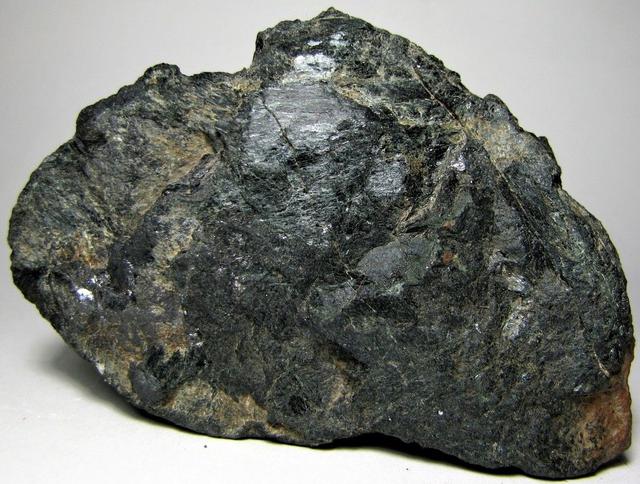
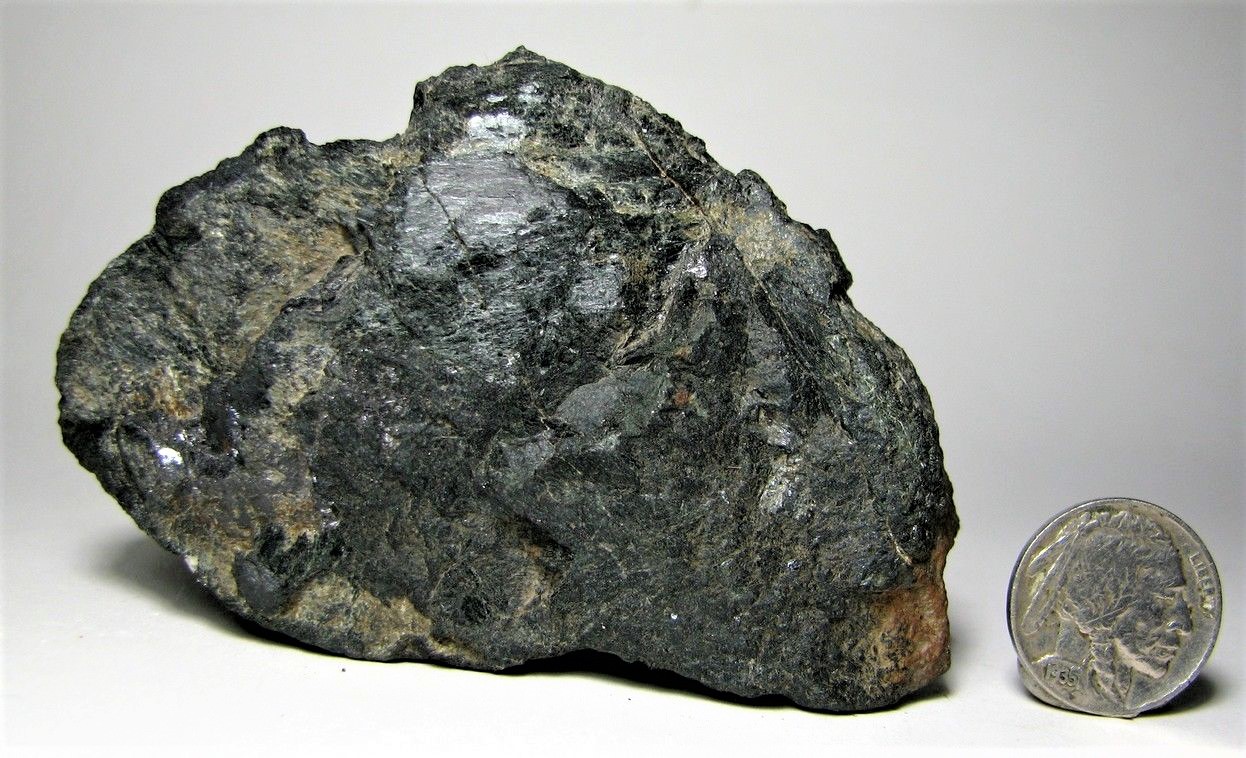
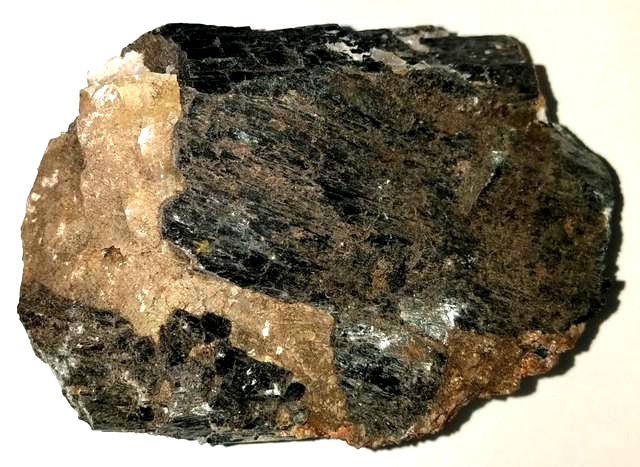
Ontario
CANADA
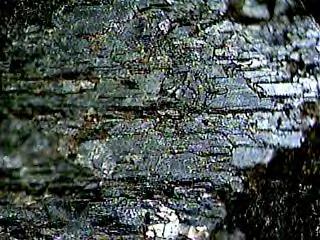
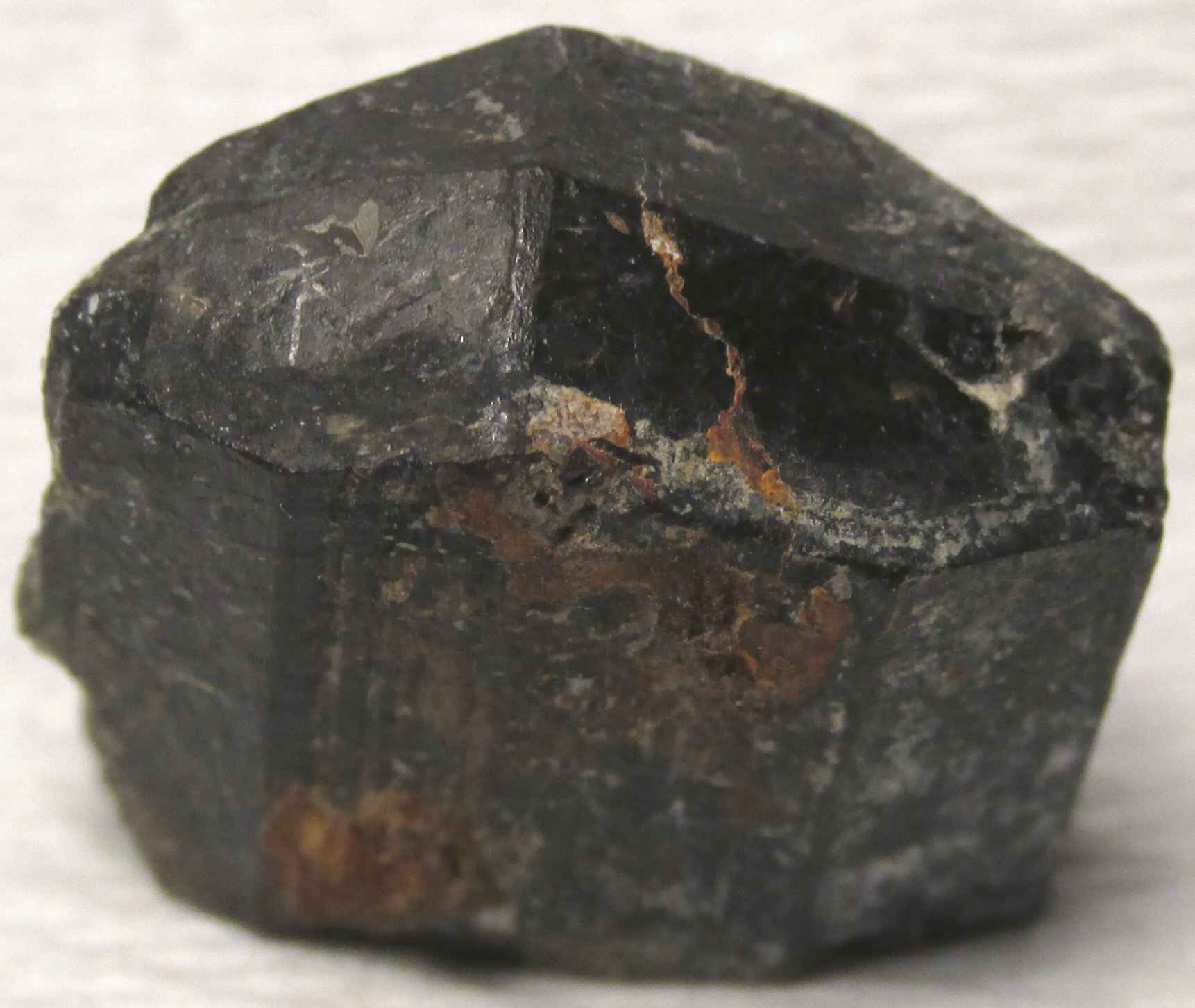
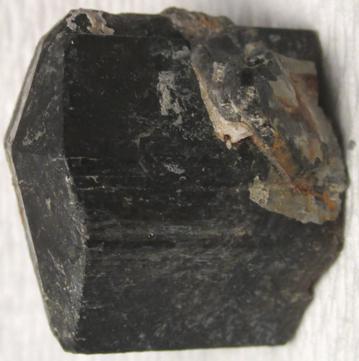
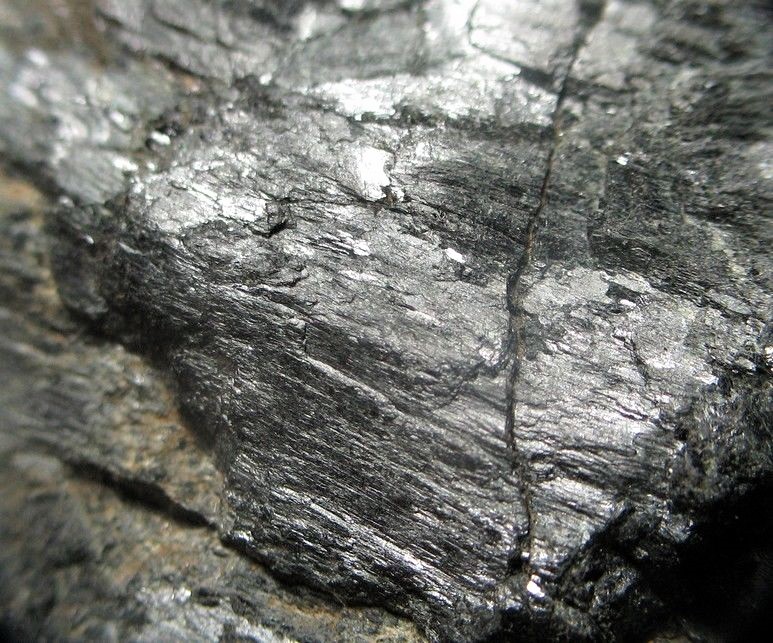
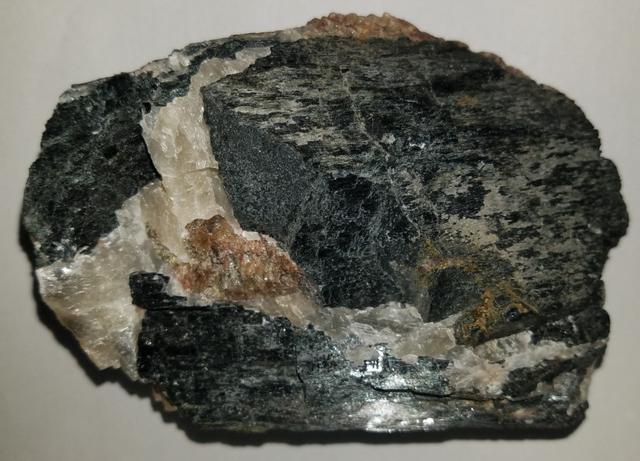
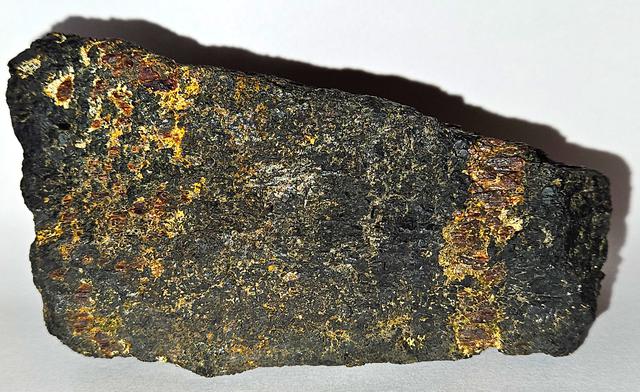
Hornblende
Cleavage Surfaces
Phillips Mine
NEW YORK
Diagnostic Features
1. Hardness : 5,5
2. Streak : Greenish white to none
3. Luster : Nonmetallic
4. Specific Gravity : 3.1
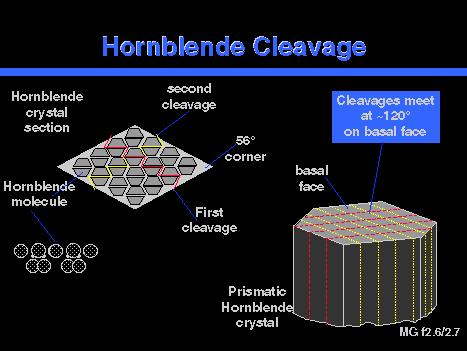
5. Cleavage : 2 lengthwise directions at 56 and 124 degrees
6. Fracture : None
7. Other : Commonly dark green to brownish green. Cleaves into lengthwise, prismatic crystals.
Identification Tips
Amphiboles and pyroxenes are often mistaken for one another due to their generally similar appearance and color. However, there are important distinguishing characteristics by which the two may be distinguished.
1. Amphibole has strongly oblique cleavage whereas pyroxene possesses orthogonal cleavage.
2. Amphiboles are more common in felsic igneous rocks whereas pyroxenes are ubiquitous to mafic and ultramafic igneous rocks.
3. Amphiboles are common in metamorphic rocks whereas pyroxenes are rare in such rocks.
4. Amphiboles tend to cleave into splintery fragments when struck, whereas pyroxenes do not.
Hornblende (Amphibole) Cleavage
[Intergrown Crystals]
Bancroft
CANADA
Photographed by Michael P. Klimetz
Photographed by Michael P. Klimetz
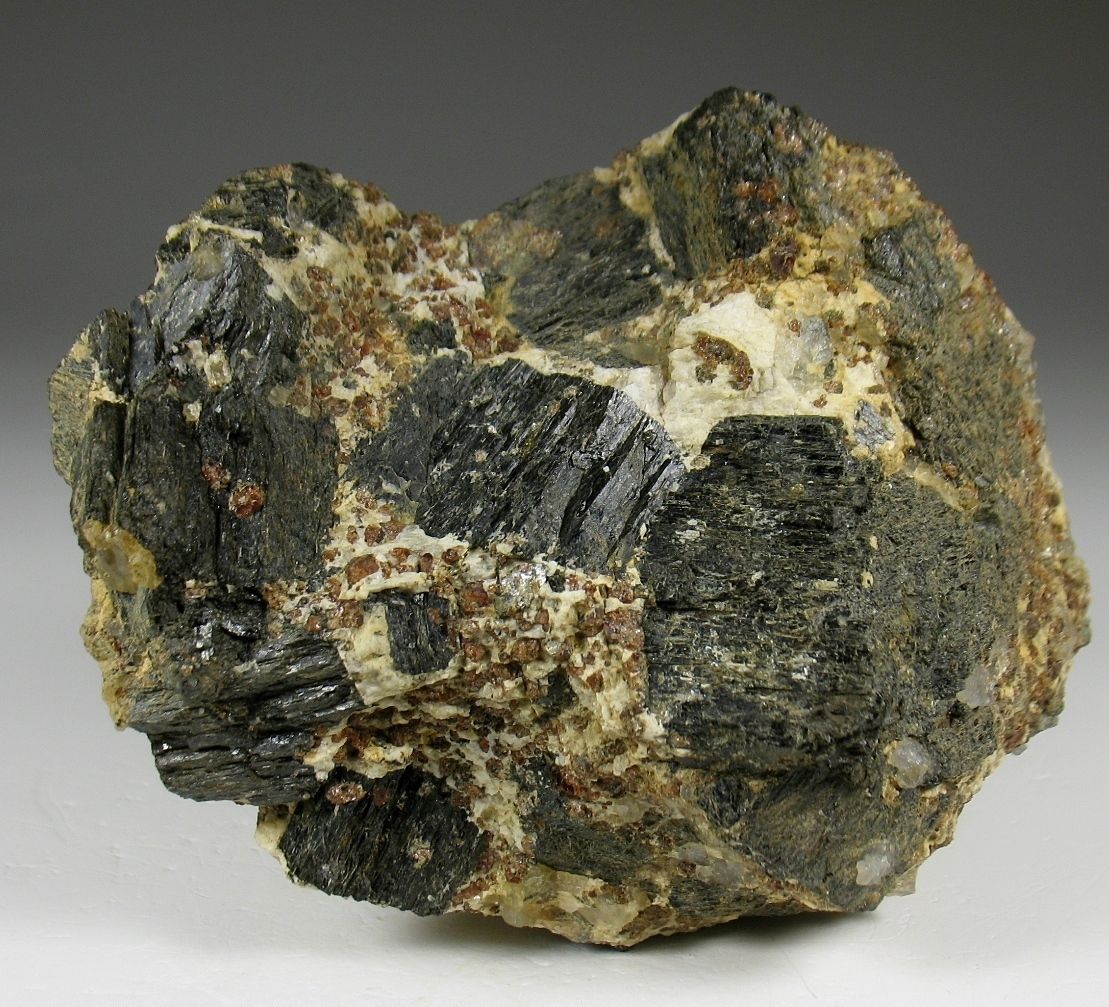
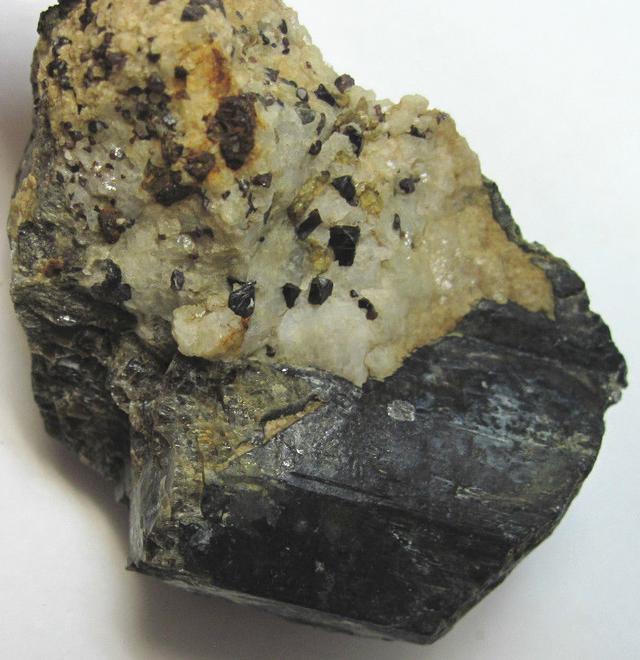
[Crystals in Albite with Garnet]
Gertrusk auf der Saualpe
Carinthia
AUSTRIA
Photographed by Michael P. Klimetz
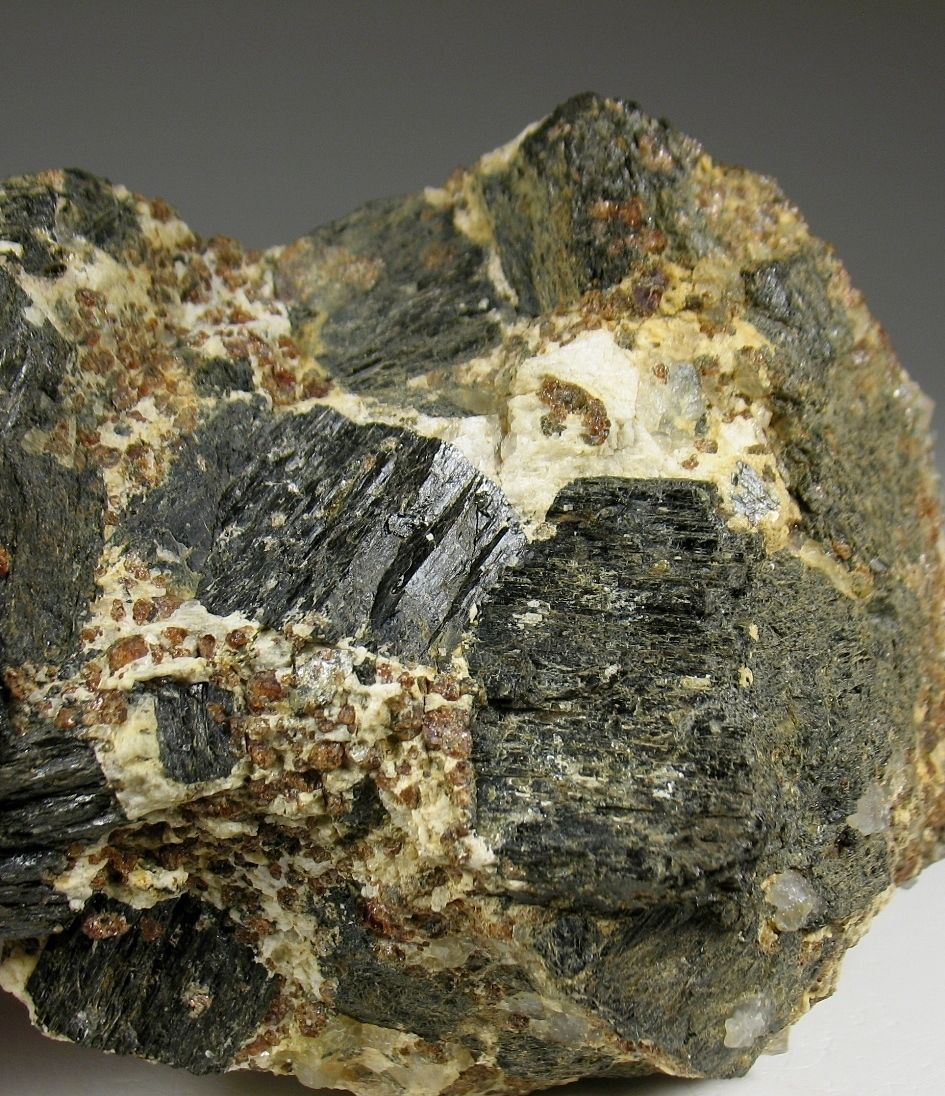
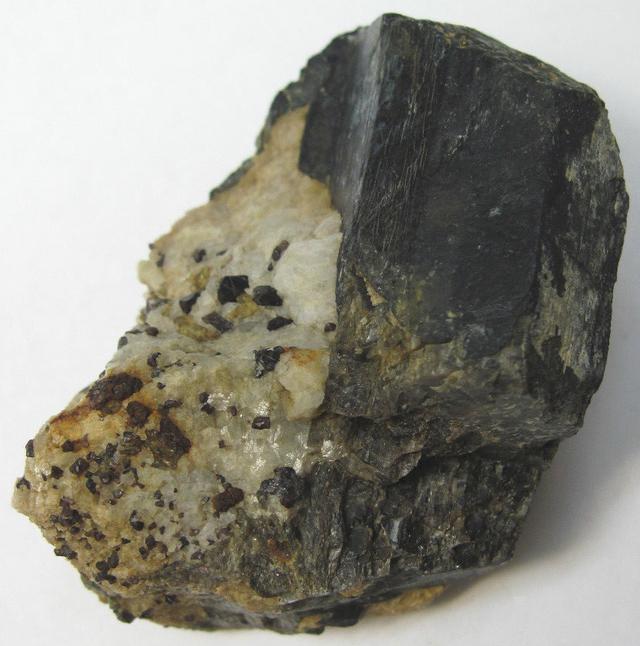
[Crystals in Albite with Garnet]
Gertrusk auf der Saualpe
Carinthia
AUSTRIA
Photographed by Michael P. Klimetz
[Crystals in Albite with Garnet]
Gertrusk auf der Saualpe
Carinthia
AUSTRIA
Photographed by Michael P. Klimetz
[Crystals in Albite with Garnet]
Gertrusk auf der Saualpe
Carinthia
AUSTRIA
Photographed by Michael P. Klimetz
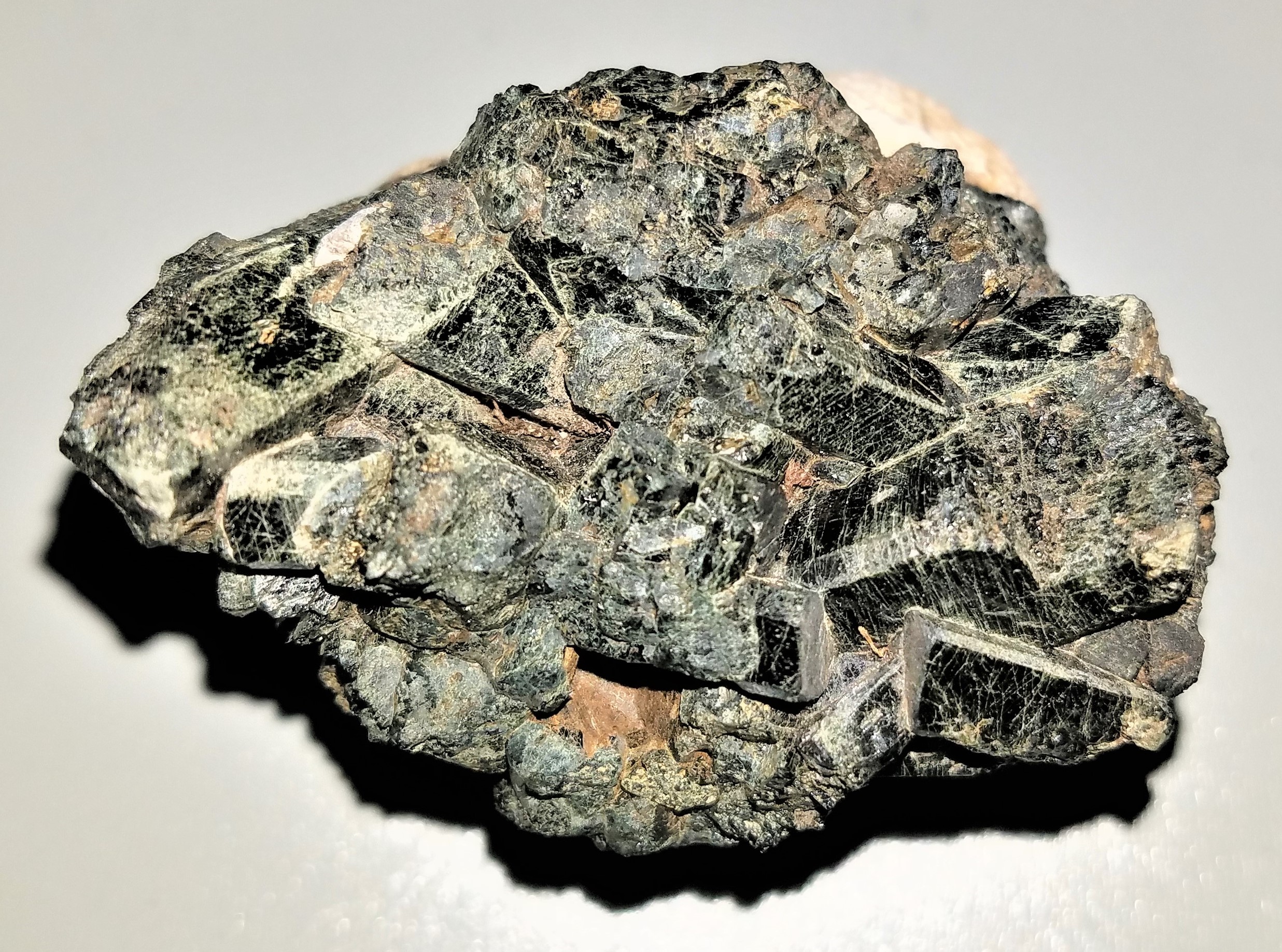
Magnesio-Hastingsite
[Terminated Crystal]
Rhein Property
Amity
Orange County
NEW YORK
Photographed by Michael P. Klimetz
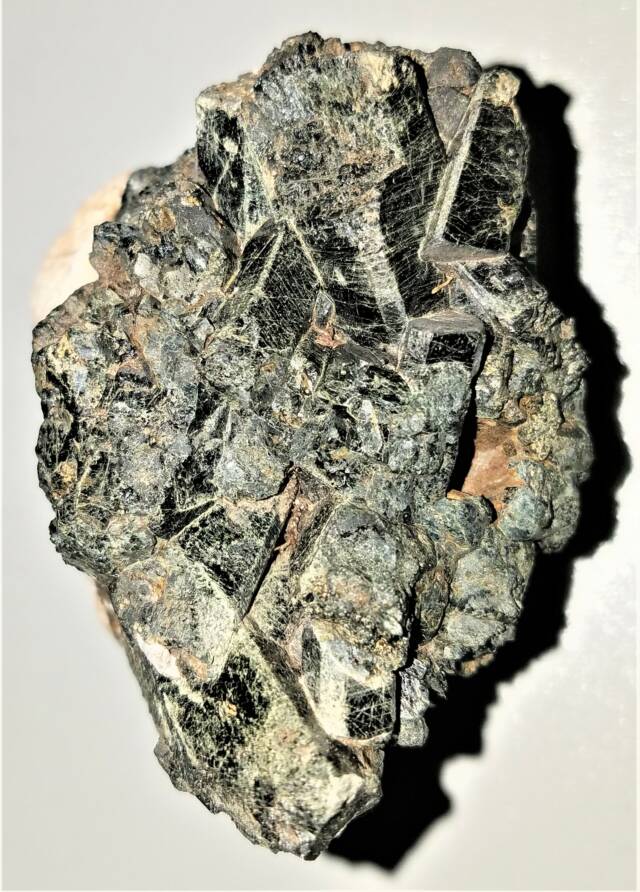
Magnesio-Hastingsite
[Terminated Crystal]
Rhein Property
Amity
Orange County
NEW YORK
Photographed by Michael P. Klimetz
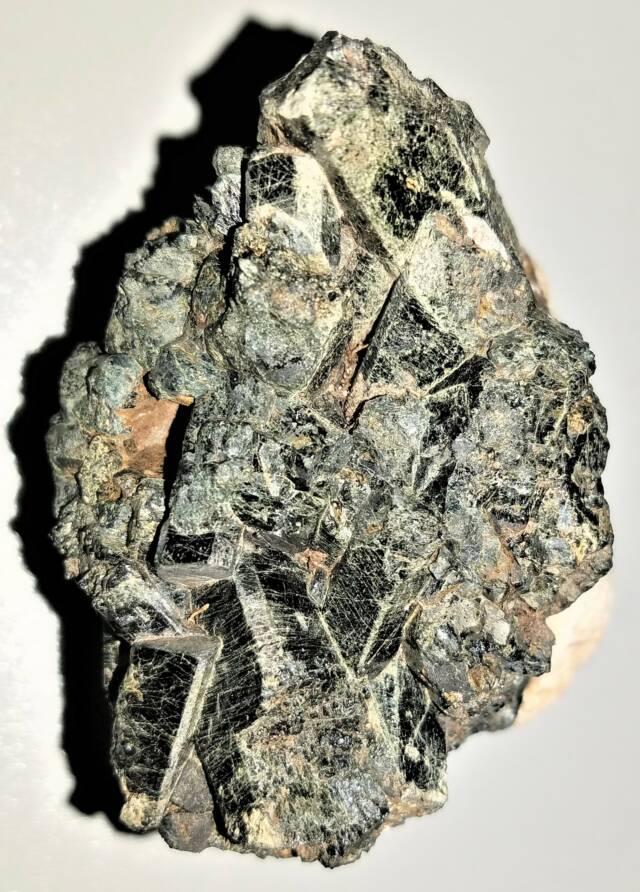
Magnesio-Hastingsite
[Terminated Crystal]
Rhein Property
Amity
Orange County
NEW YORK
Photographed by Michael P. Klimetz
Magnesio-Hastingsite
[Crystal with Calcite]
Rhein Property
Amity
Orange County
NEW YORK
Photographed by Michael P. Klimetz
Magnesio-Hastingsite
[Crystal with Calcite]
Rhein Property
Amity
Orange County
NEW YORK
Photographed by Michael P. Klimetz
[Intergrown Crystals with Feldspar]
Wilberforce
Ontario
CANADA
Photographed by Michael P. Klimetz
[Intergrown Crystals with Feldspar]
Wilberforce
Ontario
CANADA
Photographed by Michael P. Klimetz
[Intergrown Crystals with Feldspar]
Wilberforce
Ontario
CANADA
Photographed by Michael P. Klimetz
[Intergrown Crystals with Feldspar]
Wilberforce
Ontario
CANADA
Photographed by Michael P. Klimetz
[Intergrown Crystals with Feldspar]
Wilberforce
Ontario
CANADA
Photographed by Michael P. Klimetz
[Intergrown Crystals with Feldspar]
Wilberforce
Ontario
CANADA
Photographed by Michael P. Klimetz
[Intergrown Crystals with Magnetite]
Tilly Foster Mine
Putnam County
NEW YORK
Photographed by Michael P. Klimetz
[Intergrown Crystals with Magnetite]
Tilly Foster Mine
Putnam County
NEW YORK
Photographed by Michael P. Klimetz
[Intergrown Crystals with Magnetite]
Tilly Foster Mine
Putnam County
NEW YORK
Photographed by Michael P. Klimetz
[Intergrown Crystals with Magnetite]
Tilly Foster Mine
Putnam County
NEW YORK
Photographed by Michael P. Klimetz
[Intergrown Crystals]
Turner Island
Ontario
CANADA
Photographed by Michael P. Klimetz
[Intergrown Crystals]
Turner Island
Ontario
CANADA
Photographed by Michael P. Klimetz
[Intergrown Crystals]
Turner Island
Ontario
CANADA
Photographed by Michael P. Klimetz
[Intergrown Crystals]
Turner Island
Ontario
CANADA
Photographed by Michael P. Klimetz
[Intergrown Crystals]
Turner Island
Ontario
CANADA
Photographed by Michael P. Klimetz
[Intergrown Crystals]
Turner Island
Ontario
CANADA
Photographed by Michael P. Klimetz
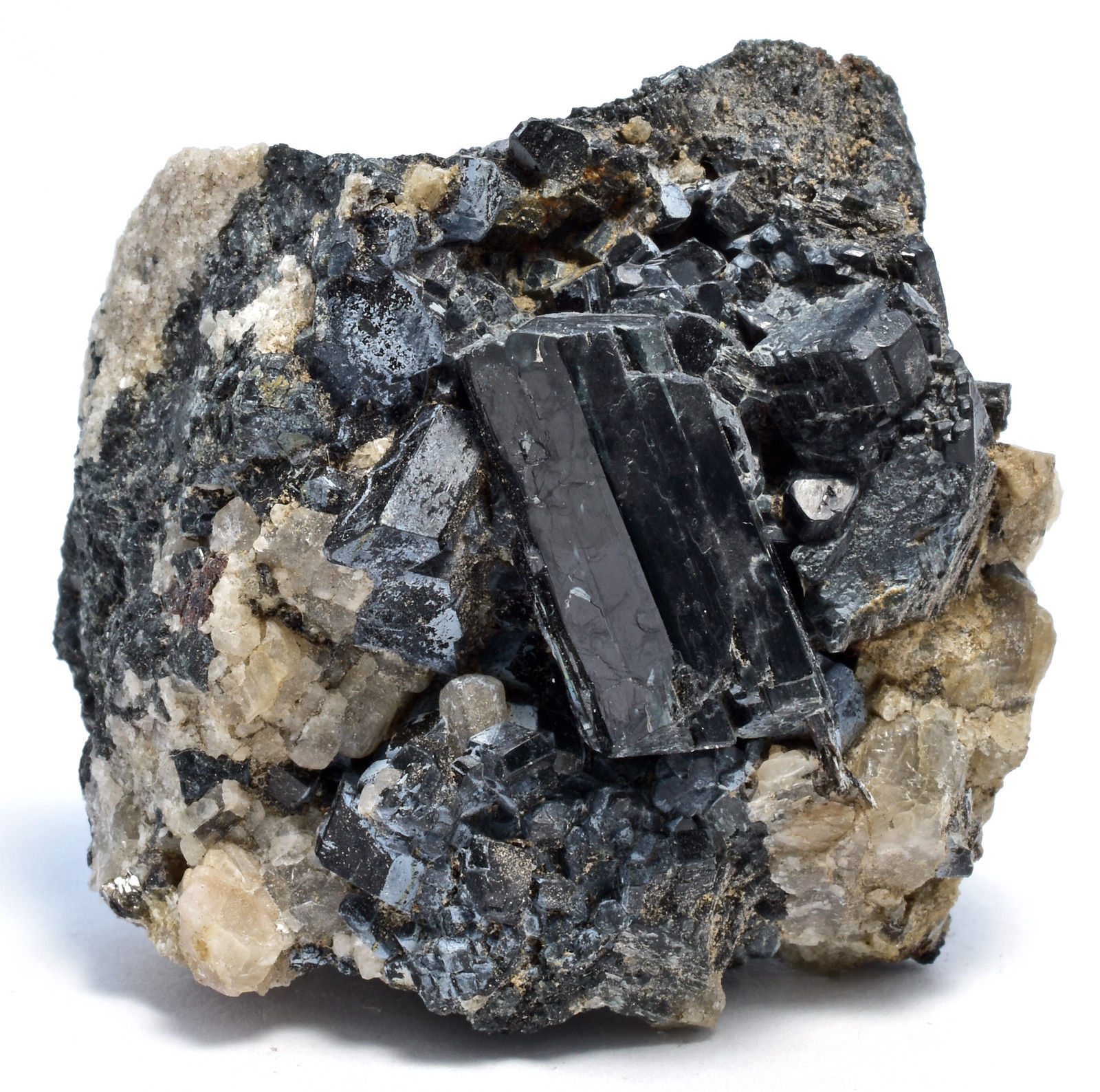
[Lustrous Black Crystals with Quartz and Garnet]
Wilberforce
Ontario
CANADA
Photographed by Michael P. Klimetz
[Lustrous Black Crystals with Quartz and Garnet]
Wilberforce
Ontario
CANADA
Photographed by Michael P. Klimetz
[Lustrous Black Crystals with Quartz and Garnet]
Wilberforce
Ontario
CANADA
Photographed by Michael P. Klimetz
[Lustrous Black Crystalline Mass with Plagioclase-Rimmed Garnet]
Jay Peak
Wilmington
Essex County
NEW YORK