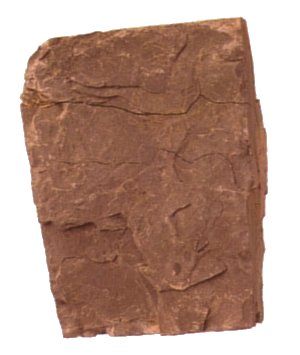
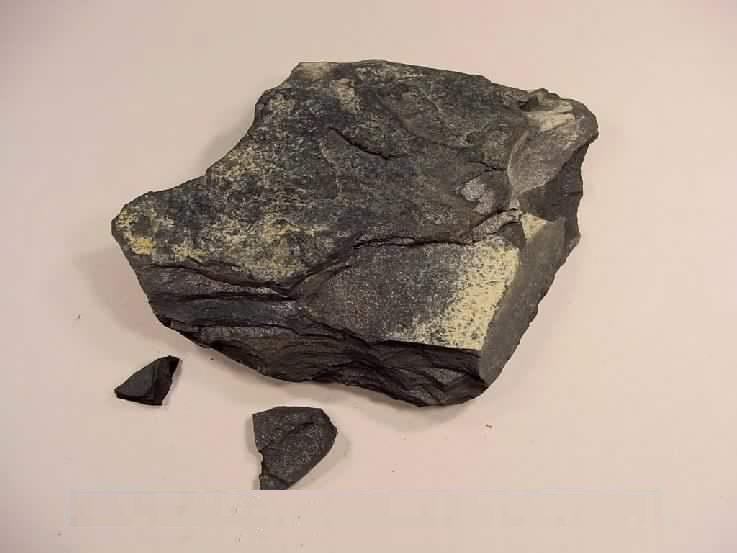
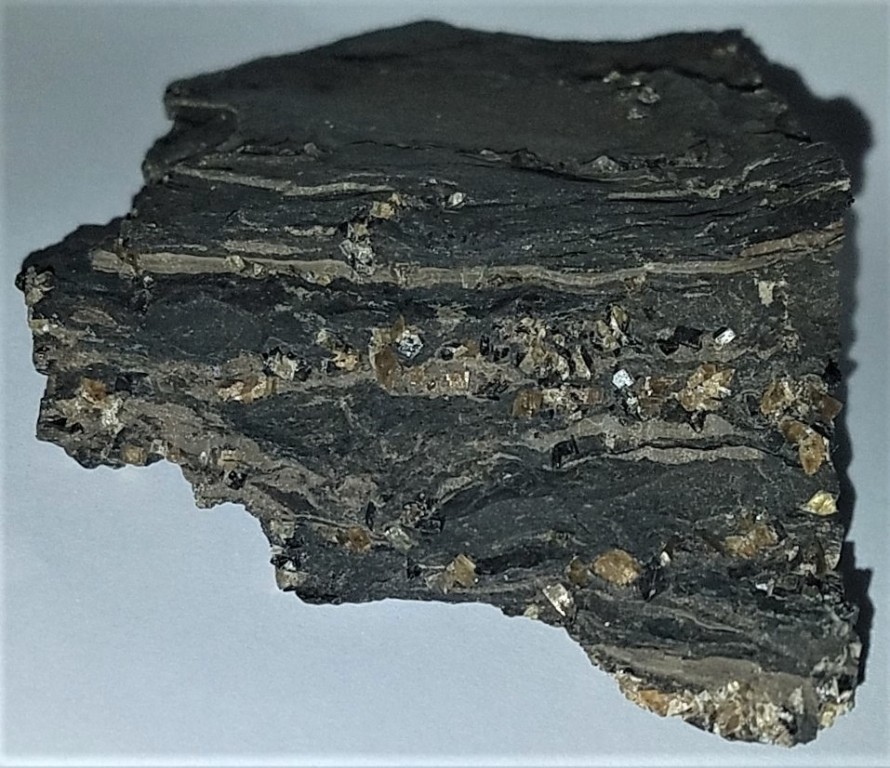
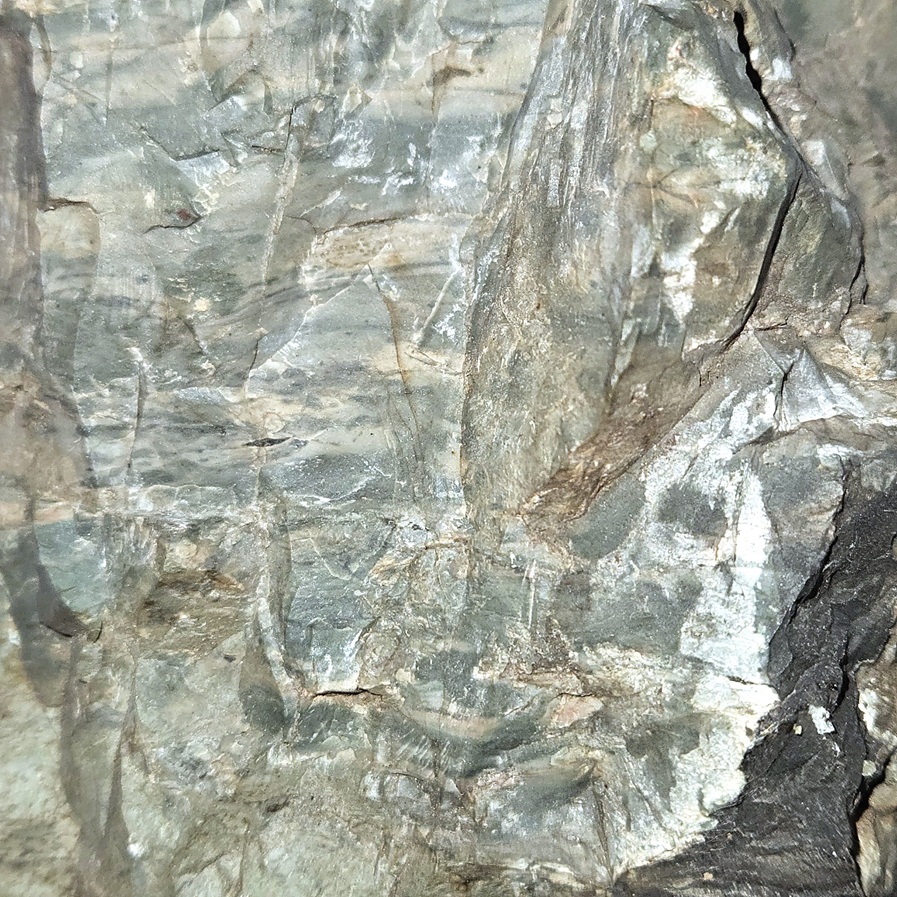
Disrupted Laminated Dark Green Cherty Calcareous Shale
Late Proterozoic - Early Cambrian
Nassau Formation
Chatham
Columbia County
NEW YORK
Photographed by Michael P. Klimetz
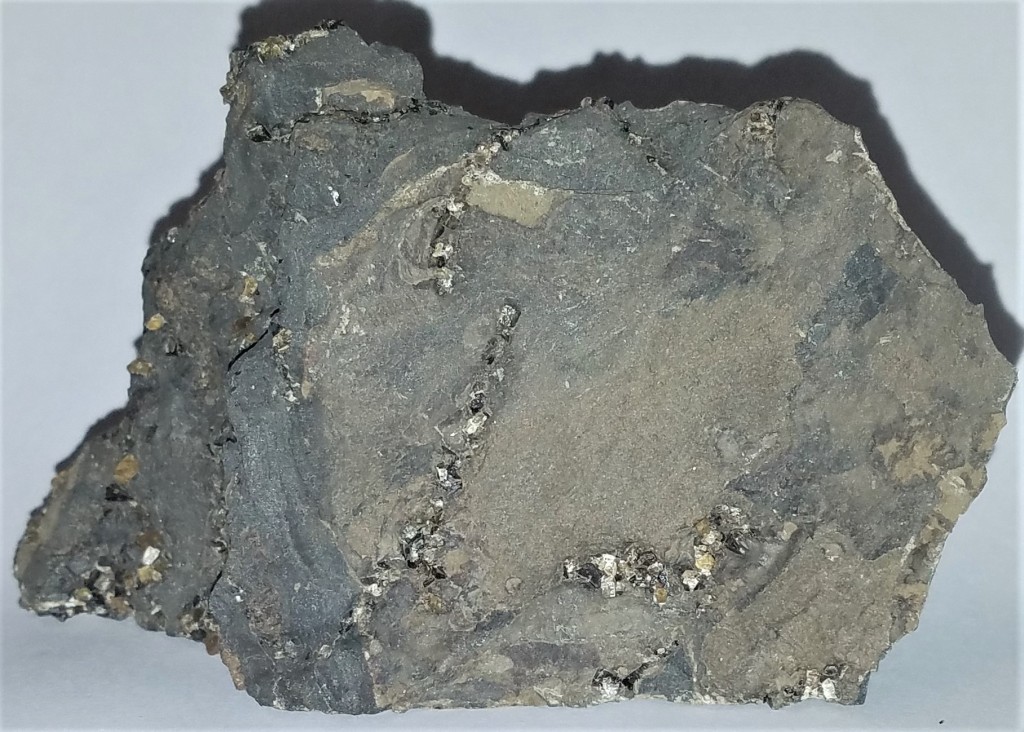
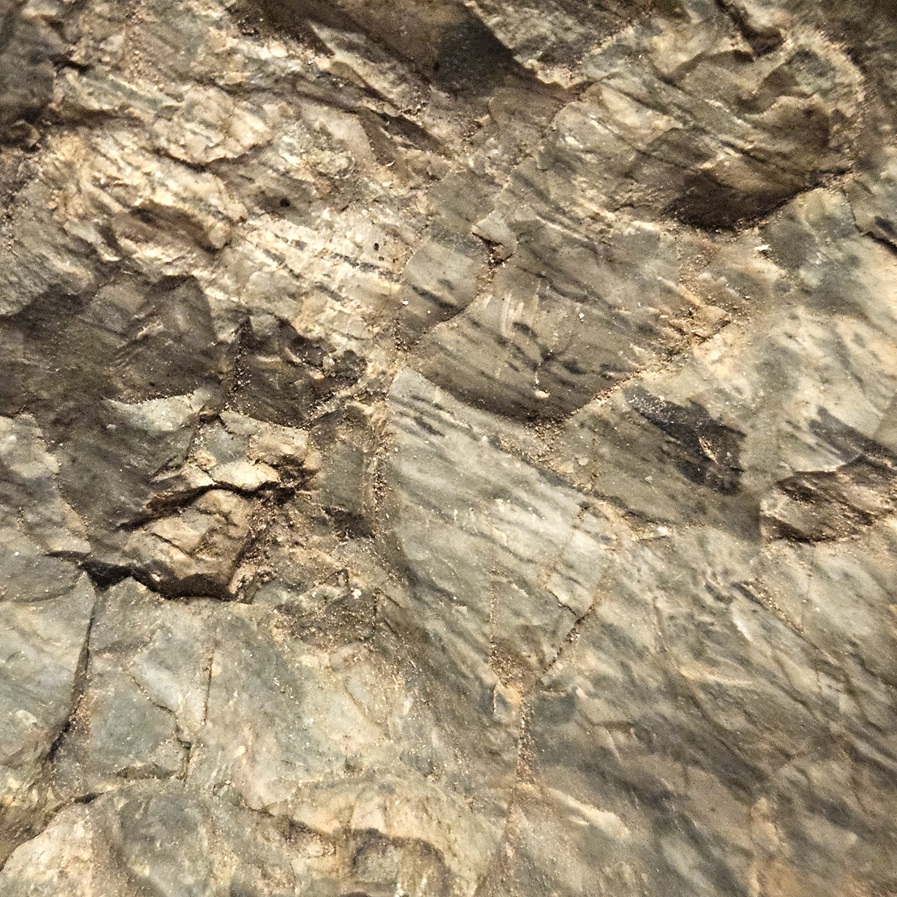
Disrupted Laminated Dark Green Cherty Calcareous Shale
Late Proterozoic - Early Cambrian
Nassau Formation
Chatham
Columbia County
NEW YORK
Photographed by Michael P. Klimetz
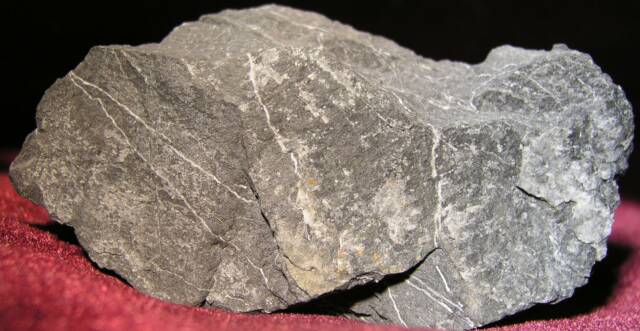
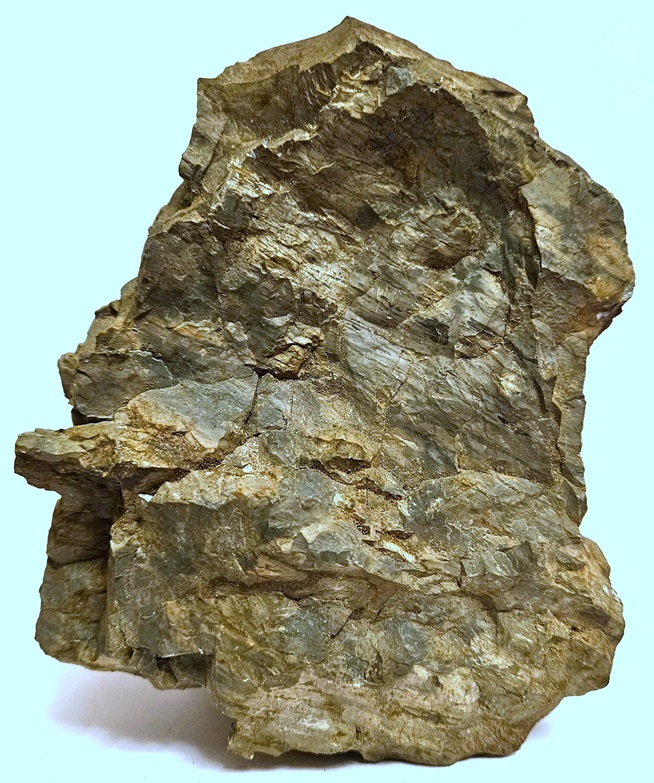
Disrupted Laminated Dark Green Cherty Calcareous Shale
Late Proterozoic - Early Cambrian
Nassau Formation
Chatham
Columbia County
NEW YORK
Photographed by Michael P. Klimetz
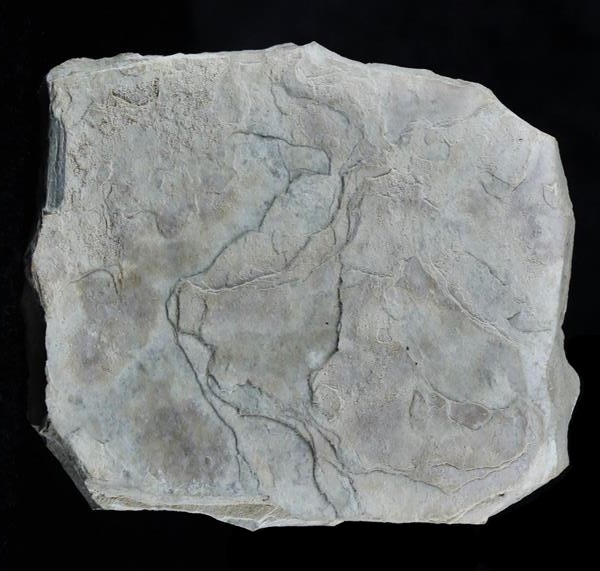
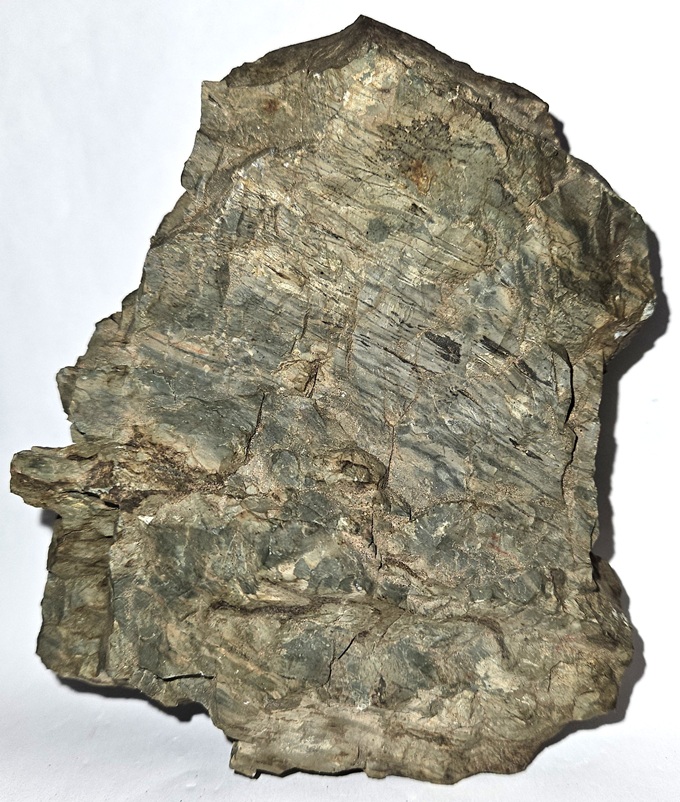
Disrupted Laminated Dark Green Cherty Calcareous Shale
Late Proterozoic - Early Cambrian
Nassau Formation
Chatham
Columbia County
NEW YORK
Shale is a fine-grained, clastic sedimentary rock formed from mud that is a mix of flakes of clay minerals (hydrous aluminium phyllosilicates such as kaolin Al2Si2O5(OH)4) and tiny fragments (silt-sized particles) of other minerals, especially quartz and calcite. Shale is characterized by its tendency to split into thin layers (laminae) less than one centimeter in thickness referred to as fissility. Shale is the most common sedimentary rock. Shales are typically grey in color and are composed of clay minerals and quartz grains. The addition of variable amounts of minor constituents alters the color of the rock. Red, brown, and green colors are indicative of ferric oxide (hematite – red), iron hydroxide (goethite – brown and limonite – yellow), or micaceous minerals (chlorite, biotite and illite – green). The color shifts from reddish to greenish as iron in the oxidized (ferric) state is converted to iron in the reduced (ferrous) state. Black shale results from the presence of greater than one percent carbonaceous material and indicates a reducing environment.[4] Pale blue to blue-green shales typically are rich in carbonate minerals.